Samba history
From Bahia to Rio: samba roots
How samba travelled from Afro-Brazilian communities in Bahia to Rio's port zone, Tia Ciata's house, the song Pelo Telefone and the samba schools.
Book the Pedra do Sal evening ↗Quick answer
Samba grew out of Afro-Brazilian communities in Bahia and took urban form in Rio de Janeiro, where Bahian families settled in the port zone. Tia Ciata's house was a gathering place, Pelo Telefone is considered the first samba recorded in Brazil, and the Estácio neighbourhood shaped the urban Carioca style.
Bahia first
Wikipedia says samba originated in the Afro-Brazilian communities of Bahia and that most of its variants developed in the states of Rio de Janeiro and Bahia. Samba de roda, a circle dance of the Bahian Recôncavo, is among its roots, and migration from Bahia to Rio in the early 20th century contributed to the urban styles that followed. The port zone, with its work and its Bahian households, is where that migration left its mark.
Tia Ciata and her house
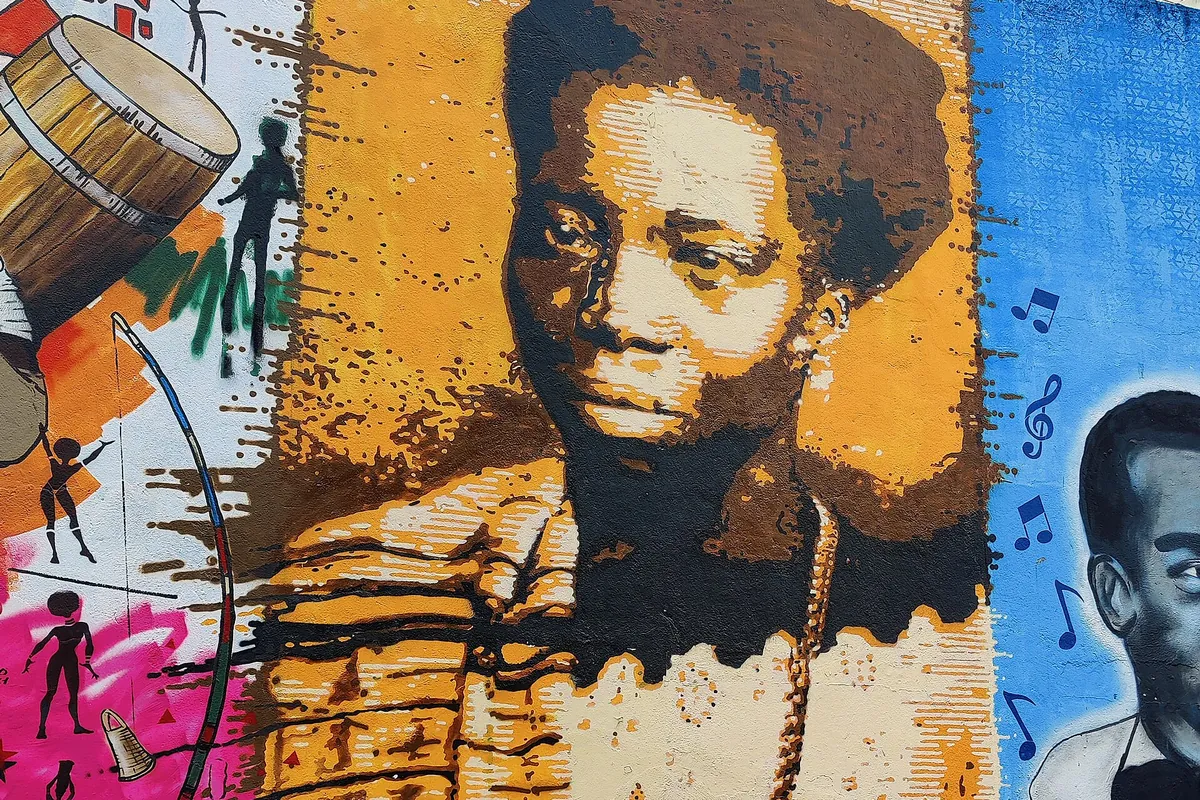
Hilária Batista de Almeida, known as Tia Ciata, was born in Bahia and came to Rio, where she worked as a food vendor. A candomblé priestess, she lived near Praça Onze, and Wikipedia describes her home as a meeting place for religion, cuisine, dance and music, one of the possible birthplaces of the genre; Wikipedia says samba evolved in her back yard. The area became known as Pequena África. Portuguese Wikipedia calls her a cultural leader.
Pelo Telefone
Pelo Telefone, launched in 1917, is described by Wikipedia as the inaugural landmark of samba and as considered the first samba song to be recorded in Brazil. Wikipedia calls it a collective creation, conceived in the circle around Tia Ciata's house. The song matters here because it ties the recorded history of samba to the same Little Africa streets where Pedra do Sal stands. Wikipedia's article on Donga says he composed what is considered the first recorded samba, and that he took part in the musical gatherings at Tia Ciata's home.
Musicians linked to the rock
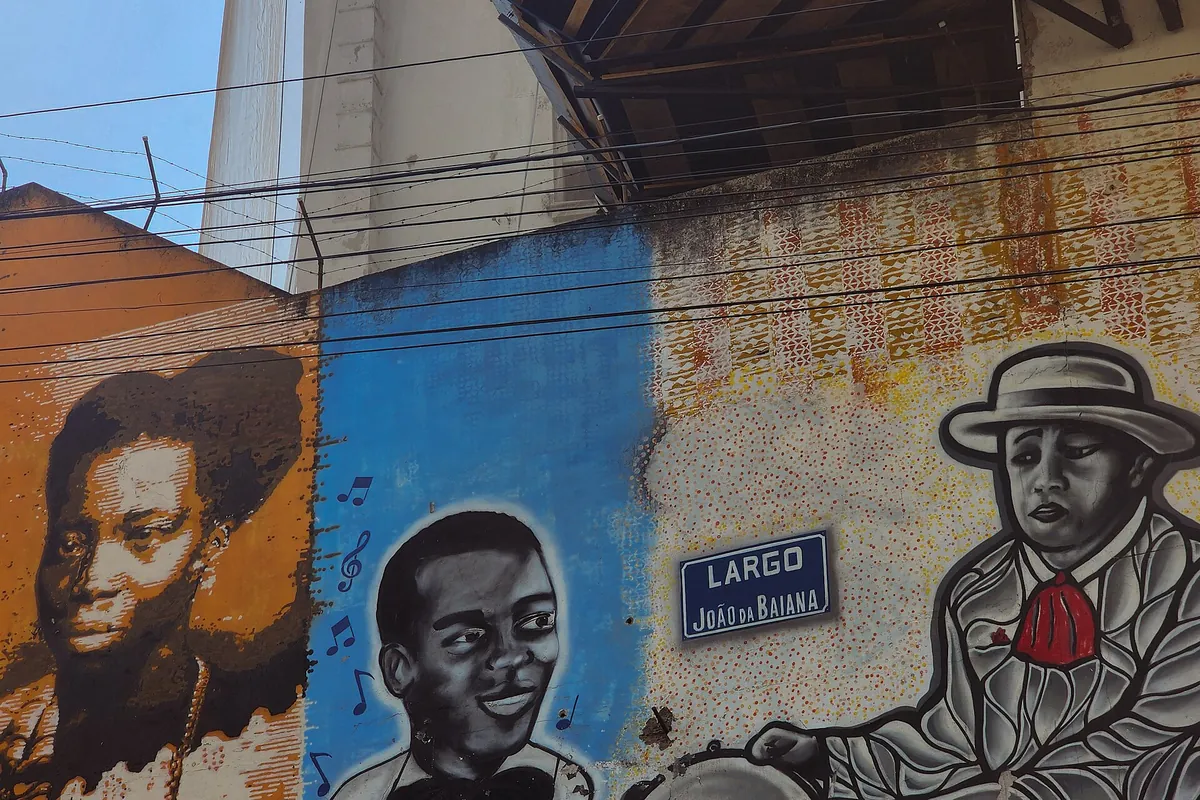
English Wikipedia names Donga, João da Baiana, Pixinguinha and Heitor dos Prazeres among the sambistas who played at Pedra do Sal. Donga was a guitarist who took part in the gatherings at Tia Ciata's home. Pixinguinha was a flautist, saxophonist and composer who developed choro. Heitor dos Prazeres was a samba composer, singer and painter who took part in the first samba schools. Wikipedia says Pixinguinha and Donga played together in the group Os Oito Batutas, which became a sensation across Brazil.
On the walls today
Murals around the rock show Tia Ciata, Pixinguinha and Heitor dos Prazeres, and a sign beside them names the Largo João da Baiana. Wikimedia Commons files record the paintings under these names. The murals turn the square into a picture gallery of the people the guided tour talks about, and they are worth a look in daylight as well as at the roda.
Estácio and the samba schools
Wikipedia says the Estácio neighbourhood produced a new style in the late 1920s that formed the genesis of urban Carioca samba, and that samba schools defined and legitimised its aesthetic bases. Wikipedia's article on Heitor dos Prazeres lists Deixa Falar, founded in Estácio, among the first samba schools. Samba-enredo, the sung theme of a school's carnival parade, accompanies the carnival parades and narrates the school's theme, according to a report on IPHAN's registration. The parade and the roda are two different settings for the same music.
A national symbol and a heritage
Samba has become one of the main symbols of Brazilian national identity, Wikipedia says. IPHAN registered Rio's samba matrices, partido-alto, samba de terreiro and samba-enredo, as intangible heritage in 2007. The report on that registration says samba involves the roda, the musicians, the voices, the bodies and the exchange between generations. The roda at Pedra do Sal is one place where that heritage is practised in public, outdoors, by musicians and listeners of different generations.
Frequently asked questions
Who was Tia Ciata?
A Bahian-born candomblé priestess whose house near Praça Onze became a meeting place for musicians in early 20th-century Rio.
What was the first recorded samba?
Pelo Telefone, launched in 1917, is considered the first samba song recorded in Brazil.
Sources